Factory Shift Handoff: How to Do It in Ten Minutes
How to run a factory shift handoff without losing orders or customer messages: what to write down, where to log it, and a ten-minute routine.
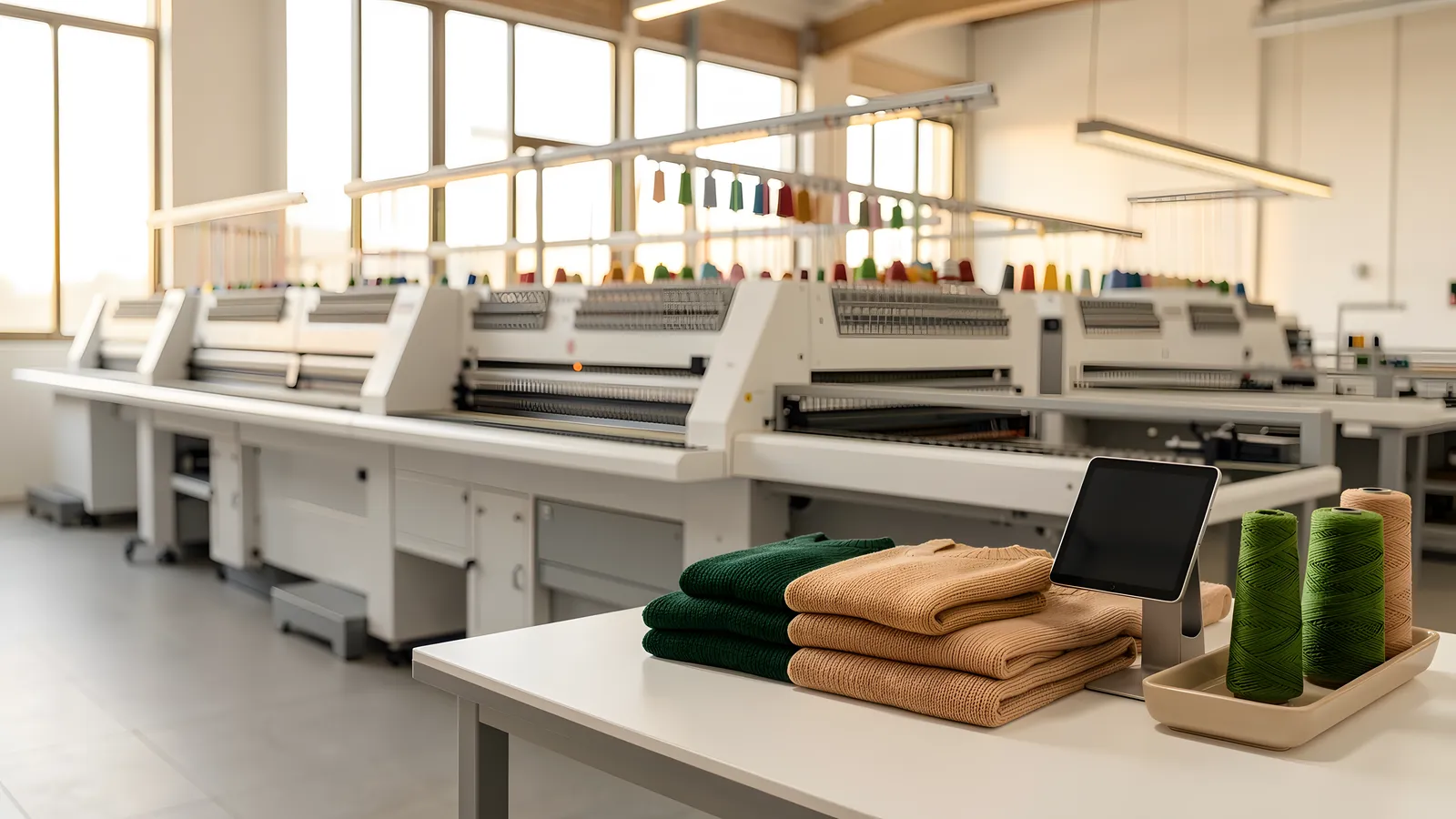
At 2 p.m., the morning shift lead leaves a note saying the sweatshirt order has to change color. The note ends up under a box of buttons. The afternoon shift comes in, picks up what is on the table, and runs the sweatshirts through the machine in the old color. Nobody notices until 5 p.m., when the customer has already called twice.
To hand off a shift without losing orders or information, every order needs one fixed place where its status is written down. The person leaving and the person arriving should spend five or ten minutes talking in front of that place, with the same list on the table.
Where information really gets lost
In a mid-sized sewing plant or machine shop, almost nothing gets lost because someone didn't care. It gets lost at the edges of the day: between cutting and sewing, between the shift that leaves and the shift that arrives, between the front-desk phone and the workbench where the piece sits.
One common mistake is the batch that sits between departments. Cutting finished, sewing assumed one more lot was still coming, and for half a day nobody knows the pieces are on a shelf. Nobody failed. Each person thought the other had passed the word along.
Another is the customer message. A customer calls at 11 a.m. and asks for different text on the label. Whoever answers writes it on a sticky note, the note goes into a pocket, and the afternoon shift never sees it. The order ships right according to the system and wrong according to what the customer asked for.
Then there is the task left half done. Someone started swapping thread on a machine and got pulled away to another emergency. If nobody wrote down that the machine is in the middle of a swap, the next person starts it up as if it were ready.
All three cases have the same cause: the information stays in one person's head or on a loose piece of paper, and the person goes home.
What to write down at shift handoff
You don't need to write everything. You need to write what the next person can't guess by looking at the workbench.
For each order in progress, a few lines are enough: the customer's name and the order number, the stage it is in (cutting, sewing, finishing, packing, shipping), what is still left to do, and any change requested after the job started. If the customer changed the color, the deadline, or the packaging, that goes in the same record, with the time it was requested and who took the call.
Next come the problems that are still open: a machine with play in it, a bolt of fabric with a defect, a piece waiting for approval. Each one gets the name of the person handling it and what is needed to close it.
Last, one line for anything unusual that day: a supplier running late, a coworker leaving early, a customer coming to pick up an order at the end of the afternoon.
When a handoff note has more than this, nobody reads it to the end. When it has less, it forces questions that nobody has time to ask.
Notebook, whiteboard, or phone
All three work, as long as they follow one rule: there is only one place where the truth lives. If the notebook says one thing and the whiteboard says another, the department supervisor spends the morning deciding which one to trust.
A notebook is cheap and everyone knows how to use it. It fails when two departments need the same record at the same time, or when someone's handwriting is hard to read at six in the morning. It also won't warn anyone when an order has been stuck for too long.
A whiteboard everyone can see answers the question "what stage is each order in?" well. You just look. It works in one room with a small number of orders. In a plant with several departments or buildings, the board in one room tells the other room nothing, and the person in the warehouse has to walk to the office to find out what cutting has already done.
A phone, or a shared screen, has the advantage that the record is the same for everyone at the same time, and it stays saved. If a customer calls and the message is entered on the spot, the afternoon shift sees it when they walk in. The downside is the learning curve: someone who has never used it needs time, and if the system is complicated, people are back on paper within two weeks.
The right choice depends on the size of the business. A shop with one room and two departments can do fine with a board and a notebook. A plant with three shifts and orders at several stages gains from keeping the record in a system everyone checks. You can see how we organize this for factory teams in Companies and industry.
A ten-minute shift handoff
This routine works for any department supervisor, with a notebook or with a system, and you can start it on Monday.
Before the conversation
Fifteen minutes before leaving, each supervisor updates the record for their orders: stage, what is left, customer changes, open problems. If it isn't written down, it didn't happen.
The conversation, standing at the orders
The person leaving and the person arriving meet at the workbench or the board, with the list in front of them. They go order by order, only the ones in progress. The person leaving says out loud what is written and adds what didn't fit on paper. The person arriving asks questions. If the answer is "I don't know," it gets written down as pending, with the name of the person who will find out.
Ten minutes is enough for this when the record is up to date. If it takes twice as long, the problem is not the conversation, it is a record that arrived incomplete.
The close
The person arriving repeats, in two or three sentences, what they will handle first. If that doesn't match what the person leaving expected, they fix it right there, before anyone walks out. Then they sign or write their initials in the record. The signature marks the moment responsibility changes hands.
Who owns a task that is left half done
The simplest rule is this: the task belongs to whoever started it until someone explicitly accepts it. Leaving it written down is not enough. The person coming in says "I've got this one," and the name changes in the record.
If nobody accepts it, the department supervisor decides on the spot who takes it or whether it waits. What can't happen is a task with no name on it, because that is how a machine with a half-finished thread swap ends up being used by someone who didn't know.
Customer messages follow the same rule. Whoever receives one writes it in the order's record, with the time and their name. Whoever starts the next shift reads that record before touching the order. If the message changes the work, the supervisor tells the person at the workbench directly, out loud, and not only in writing.
Getting the team to use the record without pushback
The pushback is almost never against the record itself. It is against more work at the end of an already tiring day. If writing takes ten minutes per operator, nobody writes.
Start with one department, the one that loses the most information. Ask that department's supervisor to use the routine for two weeks and report what is too much and what is missing. Adjust. Only then expand to another department, with someone who can explain to coworkers how it works and why it helps.
Show a concrete gain early. When an order is found in seconds because it was logged, or a message reaches the right shift, tell the team. People adopt what saves them a phone call at nine at night.
Write only what is needed. A record with too many fields fills up with "n/a" and stops being read. If nobody looks at a field for a month, remove it.
If you want to see what a routine like this would take at your business, GoApexi offers a free diagnostic of how information moves between departments and shifts: request the free diagnostic.
Frequently asked questions
How long should a shift handoff take?
About ten minutes, with the records already updated before the conversation starts. If it runs much longer, the record is usually incomplete or there are too many orders to cover at once, and it is worth splitting the conversation by department.
How can I tell what stage each order is in without asking anyone?
Each order needs its stage written in a place everyone can see: a whiteboard in the room or a shared record on a screen. The stage changes the moment the piece moves from one department to the next, not at the end of the day.
Who is responsible when a task is left half done?
Whoever started it, until another person accepts it out loud and the name changes in the record. If nobody accepts it, the department supervisor decides who takes it before the shift ends.
What should be written down at shift handoff?
The stage of each order, what is left to do, any changes requested by the customer with the time and the name of who took them, and the problems still open with the person responsible for each. Anything the next person can see by looking at the workbench doesn't need to be written down.
Was this article helpful?
0
Comments
Share your thoughts or ask a question. No account needed.
Loading comments…